A Collaborative Research Enablement and Resource Program for Understanding Protein Target Behavior and Function in Cells.
OTI provides participating research groups with access to MICRO-TAG® reagents for exploratory studies.

Reveal how proteins behave in their native cellular environment.
* Proteins stability and folding dynamics
* Conformational landscapes and transitions
* Cellular context-dependent behaviors

Generate real-time evidence to de-risk and prioritize targets.
* Confirm target expression and stability in cells
* Assess functional relevance across conditions
Inform guided decisions earlier

Gain deep insight to guide how target responds to therapeutic molecules.
* Assess target druggability and biophysical properties.
* Identify allosteric sites and conformational plasticity.
* Compare mechanisms across modalities.

Measure on-target engagement and cellular response in real time.
* Quantify compound-induced (de) stabilization.
*Compare potency across compounds and conditions.
* Monitor engagement in relevant cellular models.
Many biologically important proteins remain difficult to study in their native cellular environment. These targets often exhibit complex conformational behavior, dynamic interactions, intrinsic disorder, or limited accessibility to conventional biochemical approaches.
Representative Target Classes include:
Transcription Factors: cMYC, BCL6, FOXP3, STAT6, βcatenin
Membrane Proteins and GPCRs: GPR75, GLP1, β2AR, EGFR, CD3
Enzymes: KRAS, MAPK1, PLK1, UBE2N
Participants receive the Real-Time MICRO-TAG Cell Target Engagement kit and supporting materials.
All experimental data are fully owned by participating groups for publication and other purposes.
We simply ask for your feedback ho help guide future MICRO-TAG improvement.

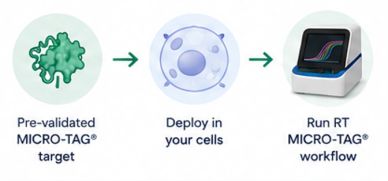
Fastest path to insights:
* Access to a library of pre-validated targets
*Minimal setup and optimization
*Ideal for rapid exploration and benchmarking

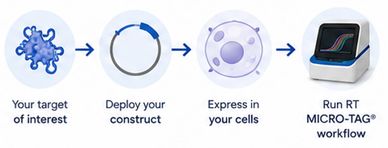
Study targets relevant that matter.
* Use your own constructs and models
* Support by compatibility guidance
* Maximum flexibiliity for your research

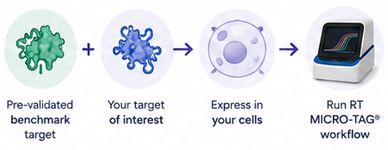
Combine benchmark targets with novel targets of interest.
* Benchmark alongside your target
* Generate comparative data
* Strengthen confidence in your data

Participants receive:

What to do:
* Validate real-time instrument performance
* Optimize target expression conditions
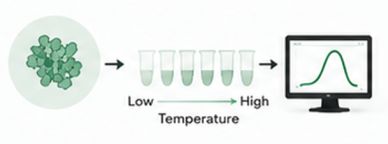
* Generate baseline thermal profile for target

What to do:
* Run temperature series measurements
* Characterize intrinsic target behavior
* Map target behavior across temperatures

What to do:
* Complete structured survey
* Provide feedback to CellarisBio team
* Share and refer if excited


Please reach us at hi@cellarisbio.com if you cannot find an answer to your question.
The Open Target Initiative (OTI) is a collaborative research enablement and resource program for understanding protein target behavior and function in cells. Through OTI, participating groups receive access to MICRO-TAG® technology for exploratory research studies.
OTI is currently focused on supporting academic and non-profit research groups conducting foundational and translational research. Participation is selective and based on scientific alignment, technical feasibility, and available program capacity.
Researchers interested in exploring MICRO-TAG® technology are encouraged to contact CellarisBio to discuss potential participation pathways.
MICRO-TAG® is a real-time cellular target engagement platform that provides cellular biophysical insight into protein target behavior, stability, conformational state, and target engagement directly in cells.
OTI can support:
Yes. OTI supports flexible participation pathways that may include validated MICRO-TAG® targets, user-selected targets, or hybrid approaches combining both.
No. Validated targets provide a rapid starting point, but participation is not limited to existing target systems.
OTI participants may work with validated MICRO-TAG® targets or their own targets of interest. For investigator-selected targets, participants are generally responsible for generation of target-specific expression constructs.
Participants may receive:
Participation packages may vary depending on the project scope.
Most OTI studies can be completed within approximately 2 months, although timelines may vary depending on the target system and study design.
All experimental data generated through OTI remain fully owned by the participating research group.
CellarisBio does not claim ownership of participant-generated research data.
We simply ask participants to share feedback on their experience with MICRO-TAG® and OTI. User feedback helps guide future platform development, workflows, and target expansion.
No particularly. Participants are expected to cover the expenses for shipment of reagents and generation of DNA constructs for their own target constructs.
Contact the OTI team to discuss your research interests and potential participation. We will work with you to determine the most appropriate participation pathway and target strategy.
Understanding how proteins behave and function in their native cellular environment is fundamental to both basic biology and therapeutic discovery. OTI provides researchers with tools to investigate protein target behavior, cellular biophysics, and target engagement directly in cells.
No. Participation in OTI does not require sharing confidential, proprietary, unpublished, or sensitive information with CellarisBio. Researchers may participate in OTI without disclosing confidential research programs, compounds, targets, data, or intellectual property.
A Confidential Disclosure Agreement (CDA) is not required for standard OTI participation. If a participant wishes to discuss confidential information with CellarisBio, a separate CDA may be established upon request.
No. You do not need to sign a Material Transfer Agreement (MTA) to participate in OTI or receive MICRO-TAG® reagents.
Standard non-commercial use terms will be provided with the MICRO-TAG® reagents at the time of shipment and will govern their use within the OTI program.
If a participant wishes to establish a broader research collaboration or discuss activities beyond standard OTI participation, additional agreements may be considered on a case-by-case basis.
Yes. OTI participation is open to qualified members of academic and non-profit research organizations. Participants should be conducting research under the supervision of an appropriate faculty member, principal investigator, or laboratory head.
Each participating group must designate a primary contact responsible for OTI communications, study coordination, and completion of the OTI evaluation survey.
CellarisBio
San Diego, California, USA
Copyright © 2026 CellarisBio - All Rights Reserved.
We use cookies to analyze website traffic and optimize your website experience. By accepting our use of cookies, your data will be aggregated with all other user data.